marshall bertram rosenberg (1934 - 2015), u.s. psychologist, best known for his concepts & teachings about nonviolent communication (NVC).
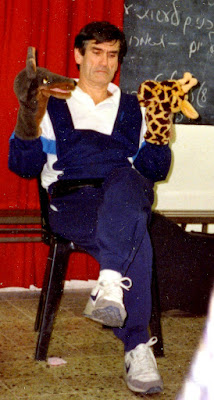
my friends, alfred adler's psychological approach was not the only audio book, my wife ["the best of all wives" (at least for me) 😃] and i have heard on our journeys, of course. anyway, it remembers me there was another really great "stuff for our minds", the communication concepts by marshall b. rosenberg, we have had on our agenda through eastern germany in june 2020. hearing adler, we tried to move our relationship to a horizontal relation (, where it already was, if you asked me).
a) here are the 6 fundamental assumptions of rosenberg's non-violent communication (GewaltFreie Kommunikation GFK), right now available just in german ... of course, you or the AI can easily find it in english, too):

=> what does it imply aka what is the beneficial approach in communication aka THE SOLUTION?
b) hearing rosenberg, we tried to communicate in the way, that we started to:
- understand the other party's needs behind the words / arguments told
- observe what kind of feelings were created in us hearing other party's arguments
- tell the other party what happens in us when we feel what it wants
- tell the other party (= the most emphatic woman in the universe i know 😍) as a pray which behaviour / reaction / solution i'd wish she would do. (just in case you do not know the difference between a pray and a demand: a pray accepts 'NO'. you see?)
as 2020 is already few seconds away and i cannot remember all the details, so i just looked up some information at wikipedia. of course, i do not have any qualms of conscience to copy a part of wiki's knowledge here as i support wikipedia financially almost every year. btw, my youngest daughter also does 😍. that could mean, children learn by example and not by the words we teach them day after day. what do you think?
wikipedia.EN => .... (marshall b. rosenberg) He worked for four years in Norfolk, Virginia's school integration. As a caricature of his program in street talk he offered this version, spoken to himself
- Thug, identify observable behaviour. Identify feeling. Identify reason for feeling. Identify wants. Put that out. Make sure other person connects with it. And thug, you'll know a miracle start to happen after a bit. ... <= wikipedia.EN
let's stop violence and let's turn our world into a place of love & freedom & support & understanding. will we? 😍
~~~~~~
addendum 2026-04-19: i've asked google's AI about NVC today:
- Beobachtung (Observation): Man beschreibt eine konkrete Handlung oder Situation sachlich, ohne sie zu bewerten oder zu interpretieren (wie eine Kameraaufnahme).
- Gefühl (Feeling): Man drückt aus, welche Emotionen (z. B. frustriert, traurig, erfreut) durch die Beobachtung ausgelöst werden, ohne anderen die Schuld daran zu geben.
- Bedürfnis (Need): Man formuliert das universelle menschliche Bedürfnis, das hinter dem Gefühl steht (z. B. Sicherheit, Verständnis, Ordnung), da Gefühle laut Rosenberg Wegweiser zu erfüllten oder unerfüllten Bedürfnissen sind.
- Bitte (Request): Man formuliert eine positive, konkrete und erfüllbare Bitte um eine Handlung im Hier und Jetzt, die klar von einer Forderung unterschieden wird (eine Bitte lässt dem Gegenüber die Freiheit, "Nein" zu sagen).
- Empathie statt Urteil: Rosenberg vertrat die Ansicht, dass Gewalt und Konflikte oft durch eine „lebensentfremdende Kommunikation“ entstehen, die von moralischen Urteilen, Vergleichen und Schuldzuweisungen geprägt ist.
- Schakal- vs. Giraffensprache: In seinen Seminaren nutzte Rosenberg oft zwei Handpuppen als Symbole: Der Schakal steht für eine bewertende, fordernde Kommunikation, während die Giraffe (das Landsäugetier mit dem größten Herzen) für eine weitsichtige und mitfühlende Kommunikation steht.
- Selbst-Empathie: Ein wesentlicher Teil der Praxis ist es, sich auch der eigenen Gefühle und Bedürfnisse bewusst zu werden, um klarer und gelassener reagieren zu können.


No comments:
Post a Comment